
Stickers and labels: a small detail that makes a big difference
How do you choose stickers and labels for your product? Explore materials, production options, roll labels and the most common ordering mistakes.
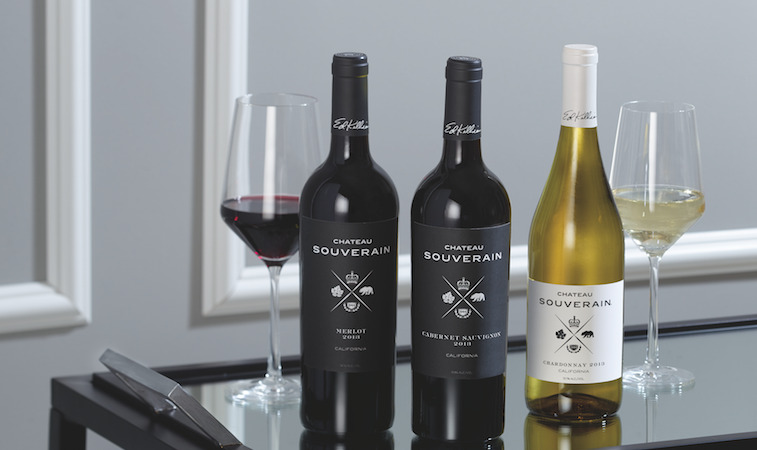
Two jars of honey sit on a shelf. Their contents are similar, and their prices are almost the same. One has a plain label that is somewhat difficult to read. The other has a thoughtfully designed sticker that tells you at a glance what is in the jar and who made it.
Which would you choose?
Customers often cannot try a product before buying it. They therefore also rely on its presentation when making a decision. A sticker or label may be small, but it has an important job: to attract attention, communicate information and build trust.
But appearance is not the only consideration in production. Even the most beautifully designed label loses its purpose if it starts peeling off, the print fades or the information becomes unreadable.
Stickers or labels – is there a difference?
Stickers serve a variety of identification, promotional and decorative purposes. We find them on packaging, shop windows, promotional products and many other surfaces. Their main purpose may be brand recognition, advertising or simply identification.
Labels usually have a more pronounced informative role. Alongside a product’s visual identity, they may include its name, ingredients, instructions for use, manufacturer details, barcodes or other required information.
The distinction is not always clear. A self-adhesive sticker on a bottle of homemade juice can also be a product label. More important than the name is the question: What must the sticker communicate, and under what conditions must it do its job?
Not every sticker suits every surface
When ordering stickers, much attention goes to shape, size and colour. The material and adhesive often receive consideration only later.
This is where problems can arise.
Imagine a bottle stored in a fridge. When you bring it to room temperature, condensation may form on its surface. A paper label suitable for a dry product on a shop shelf may not perform well under these conditions. The same applies to stickers on products exposed to sunlight, moisture, frequent handling or mechanical stress.
Paper or film stickers?
Paper stickers are often a good choice for products used or stored in normal, dry conditions. They suit various types of packaging, gift products and promotional labelling. The choice of paper surface can create a natural, matt or glossy appearance.
Film stickers are an option when greater resistance to moisture, abrasion or other environmental factors is needed. Depending on the material and production method, they may be suitable for cosmetics packaging, plastic bottles, industrial products and outdoor use.
However, choosing the base material alone is not enough. The type of adhesive, the surface to which the sticker will be applied, the application temperature and the expected service life also matter.
A material suitable for a glass jar is not necessarily the best choice for a plastic container or metal housing.
A label must be designed for the product, not just the screen
A label design can look excellent on a computer screen. Once it is printed and applied to the product, however, details we missed become obvious. The text is too small. The logo sits too close to the edge. The colours lack contrast. On curved packaging, some information disappears from view.
A good label is therefore not necessarily the one with the most information or design elements. What matters is that the information is clear and logically arranged. Customers should be able to identify the product, understand its key characteristics and find the information they need without effort.
For food, cosmetics and other regulated product categories, the applicable labelling requirements must be checked alongside the design. An attractive appearance is no substitute for accurate, legible information.
Roll labels or individual stickers?
When choosing how stickers are supplied, the main consideration is how they will be applied to the products.
For smaller quantities and manual application, stickers on sheets or individually cut stickers can be practical. They are suitable, for example, for small producers, promotional campaigns or products labelled by hand.
For larger quantities or regular product labelling, roll labels are often more suitable. This format allows use with manual or automated labelling equipment, provided the dimensions and winding specifications match the equipment.
It is therefore worth considering the application process before ordering. A producer who labels bottles by hand has different needs from a company whose products pass through an automated packing line. The right format can simplify work and reduce unnecessary complications during packing.
The most common mistakes when ordering stickers and labels
Problems often become apparent only after the stickers have been printed. However, many mistakes can be prevented by making a few decisions in good time.
1. Choosing the material based on price alone
A cheaper material is not necessarily more economical if the sticker does not last long enough under the intended conditions. Above all, the material must suit its actual use.
2. The wrong size or shape
A sticker that looks suitable on a flat surface may not fit curved packaging well. Before ordering a larger quantity, it is advisable to check the dimensions directly on the product.
3. Text that is difficult to read
Small lettering, too much information and poor contrast make reading difficult. Barcodes and QR codes also need special attention: their print quality must be sufficient for reliable scanning.
4. Unsuitable application methods
Surface cleanliness, temperature, adhesive type and conditions of use all affect a sticker’s durability. Stickers that adhere well to a smooth, dry surface may behave differently on a rough or damp one. For more demanding projects, it therefore makes sense to test material samples for suitability before final production.
How much does sticker and label printing cost?
There is no single price, as two seemingly similar stickers can require very different production processes. The final cost depends primarily on size and shape, material and adhesive type, printing complexity, any protective finish, cutting method and order quantity.
Repeat orders are another consideration. A company that regularly orders the same labels may have different production requirements from a customer who needs small quantities of several designs.
The lowest price per sticker is therefore not always the only useful criterion. A sticker may be inexpensive but create extra work if it is difficult to apply, fails to adhere to the surface or cannot withstand its intended conditions of use.
A well-chosen label is more than a printing expense: it also contributes to reliable packing and product presentation.
Custom sticker and label printing at Grafika Gracer
Every product has its own requirements. A jar of homemade jam, cosmetics packaging and an industrial product do not need the same label, even though the basic purpose of each is clear, reliable identification.
At Grafika Gracer, a printing company in Celje with a tradition dating back to 1976, we produce stickers and labels for a range of purposes, from product identification and information labels to industrial and security labels. During planning, we consider the material, surface, application method, usage environment and required durability. We can also help customers prepare print files and choose a suitable production option.
Do you need stickers or labels for your product?
To help us prepare a quotation, tell us what type of product you are labelling, the approximate sticker dimensions, the quantity required and the conditions of use. If your label is already designed, you can also attach the print file. You do not need to have every technical detail settled. What matters first is that we understand your needs.
Send us an enquiry and together we will find a suitable solution for your product.